#200 V̶λV
In chapter 3, Ryland first discovers that he’s orbiting a star other than our Sun (which turns out to be Tau Ceti, explored in more detail in #69) by observing sunspots.
First, he confirms that the spots are indeed moving, and that therefore he is looking at a live-view rather than a still image of his nearest star. Then he measures the rate at which the spots are moving in order to calculate the star’s rotation, determining that this is not, in fact, our Sun. Readers may recall that he first takes this super well:
“How am I in another solar system?! That doesn’t even make sense! What star is that, anyway?! Oh my God, I am so going to die!” 04.003
Subsequent panic aside, observing sunspots was a clever move from Dr. Grace.
Sunspots are (relatively) cooler areas of the Sun, resulting from the concentration of magnetic field lines that block heat from rising to the surface. We tend to see sunspots grouped around active regions, areas with intense concentration of magnetic activity, sometimes also associated with solar flares and coronal mass ejections.
The earliest recorded mention of sunspots dates back to 800 B.C. in China while the earliest known drawing of sunspots was made by John of Worchester in 1128.
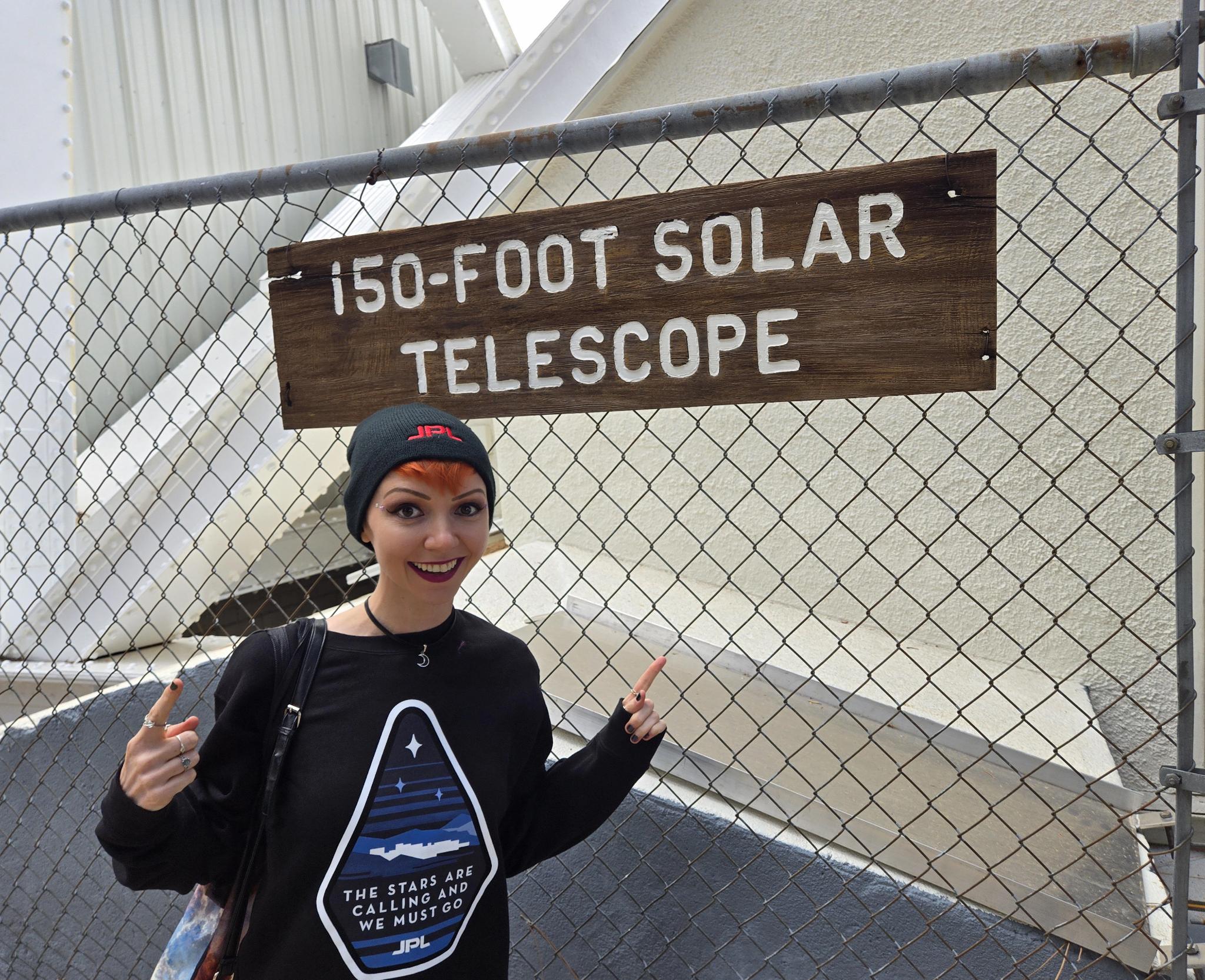
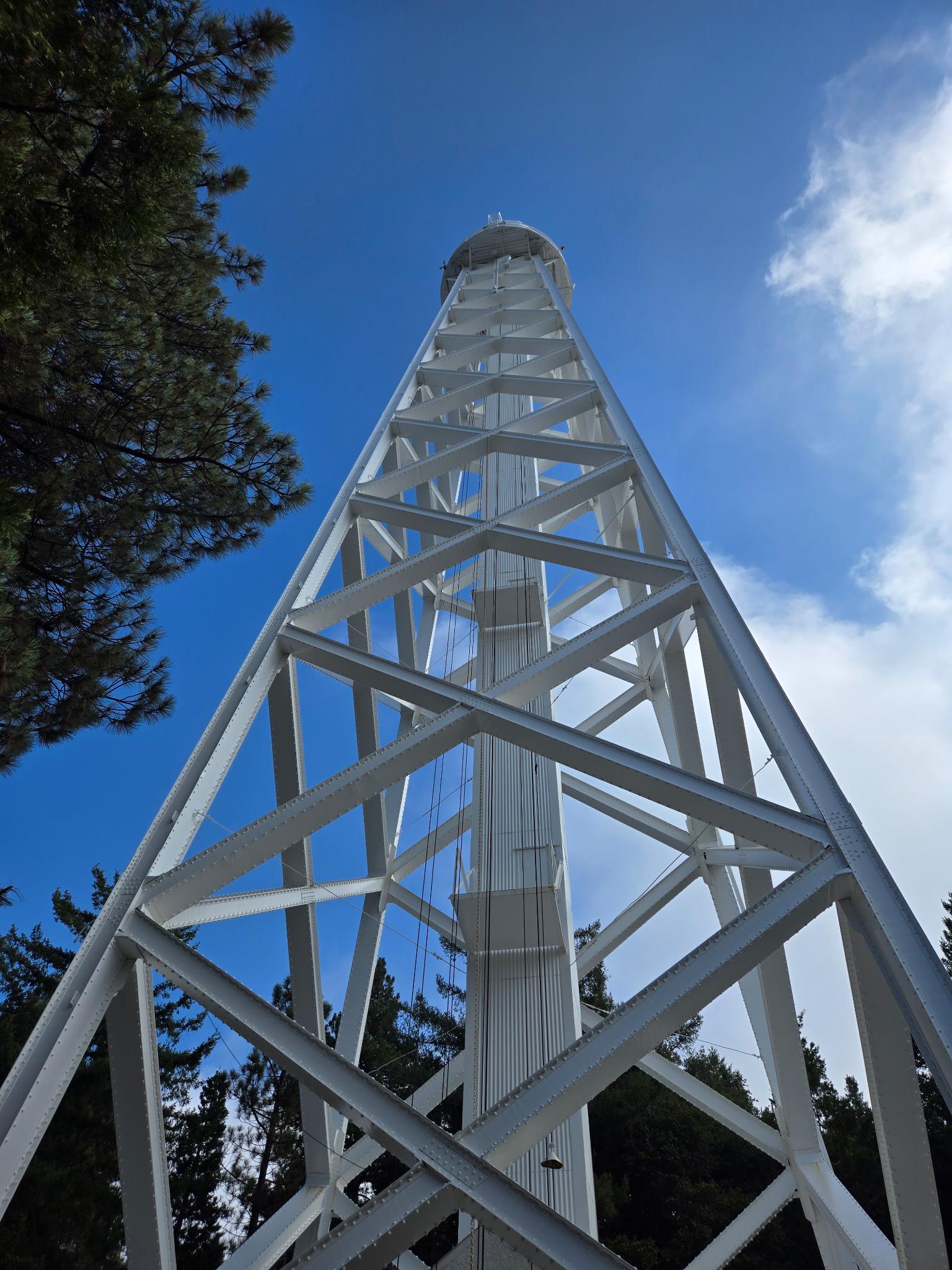
Today we have dedicated space missions to study properties of the Sun, including ESA’s Solar Orbiter and NASA’s Parker Solar Probe. We also have ground-based solar telescopes such as the 150-foot solar telescope at Mount Wilson Observatory in California, seen below being visited by (an extremely excited) one-half of the Project Amaze team:
The telescope itself, in all its towering glory:
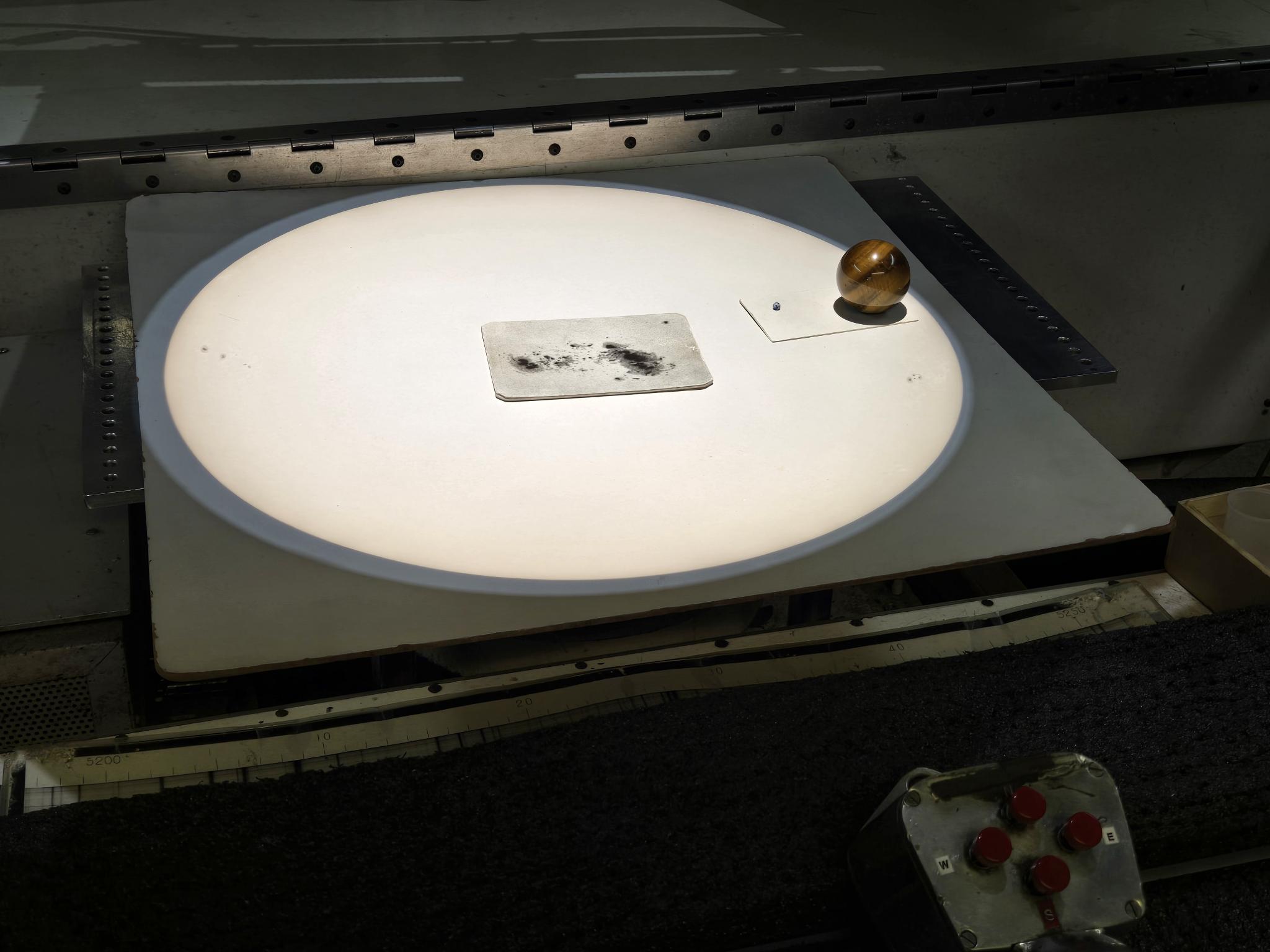
Finally, a projected image of the Sun, including a card reproducing the size and shape of the largest sunspot ever recorded there, alongside marbles representing Earth and Jupiter:
Of course, the whole point is that Ryland was not observing Earth’s Sun. Technically he observed Tau Ceti’s starspots.
In 2015, astronomers obtained the first ever direct images of starspots on another star, λ Andromedae. Observations of spectra from the star EK Draconis also indicate cool spots on the surface. It is reasonable to assume that a hypothetical future science-equipped astronaut around Tau Ceti could reproduce Ryland’s methods.
Pretty normal for sunspots
03.142